


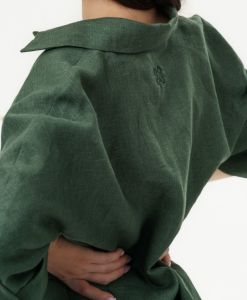
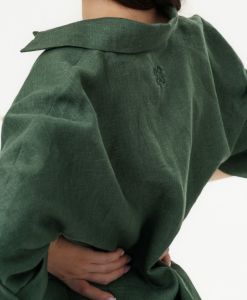
Two garments can both be labelled “100% linen” and still feel, look and perform very differently. Composition is only part of the story. Fibre quality and length, spinning, weaving, fabric weight, finishing and garment construction all matter.
Quick answer: Duasol uses linen weighing approximately 190 g/m² because it preserves linen’s natural breathability while providing better coverage, a more elegant drape and greater resilience for regular wear.
What types of linen fabric are there?
Linen fabrics differ in composition, weave, weight and finish. Common categories include:
- 100% linen – woven entirely from flax fibres, with natural texture, breathability and the ability to soften beautifully over time.
- Linen blends – linen combined with cotton, viscose or synthetic fibres. They may feel smoother or cost less, but perform differently from pure linen.
- Lightweight linen – suitable for airy shirts, scarves and very relaxed garments, although it can be more transparent and delicate.
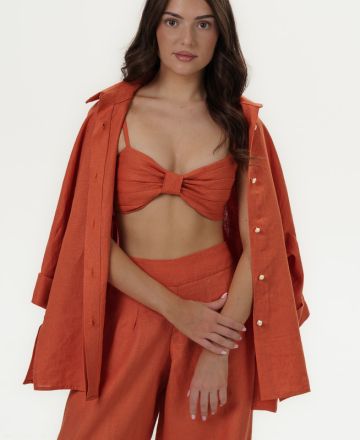
- Medium-weight linen – a versatile choice for shirts, dresses, trousers, kimonos and coordinated sets.
- Heavy linen – used for jackets, outerwear, upholstery and garments that require more structure.
No single weight is best for every purpose. The fabric should be selected according to the garment and the way it is intended to move on the body.
What does 190 g/m² mean?
Grams per square metre describes the weight of one square metre of fabric. It is not a direct quality score, but it tells us a great deal about density, coverage and behaviour. Linen around 190 g/m² sits in a balanced medium-weight category: light enough for warm weather, yet substantial enough to look refined.
Why does Duasol choose linen around 190 g/m²?
1. Better coverage
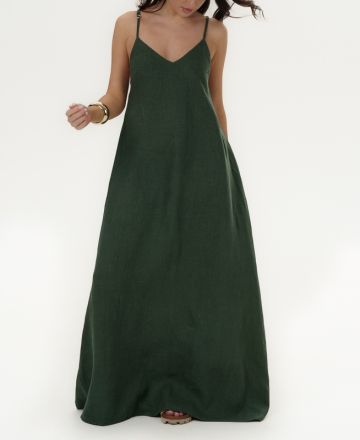
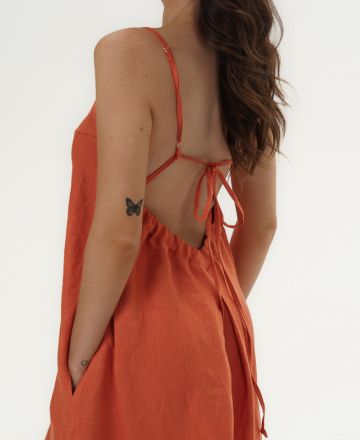
A denser weave reduces transparency, particularly in lighter colours. This makes the garment easier to wear beyond the beach— in the city, while travelling or for dinner.
2. A more elegant drape
This fabric has enough natural weight to follow the garment’s lines without feeling stiff. In Duasol’s relaxed silhouettes, that creates fluid movement and a more defined shape.
3. Greater resilience
A denser fabric contains more material per square metre and can respond better to regular wear and correct washing. Quality linen does not lose its character over time; it becomes softer and more comfortable.
4. Breathability without an overly thin feel
Linen breathes because of the structure of its fibres and weave—not simply because it is as thin as possible. A weight of 190 g/m² can therefore feel comfortable in warm weather while retaining a substantial, premium hand.
How does fabric weight affect a garment’s value?
A denser fabric uses more raw material per square metre. Fibre quality, dyeing, finishing, precise pattern cutting and local garment construction also contribute to production cost.
This does not mean heavier is always better. It means that for Duasol’s designs, we have chosen a material suited to our intention: garments that feel cool, relaxed and elegant, while remaining substantial and durable enough to be worn for more than one season.
The value of a linen garment is determined not only by the words “100% linen”, but by fibre quality, the amount of material, weaving, finishing, construction and craftsmanship.
How can you recognise a quality linen garment?
- Hold the fabric towards the light and assess whether the coverage suits its intended use.
- Check that seams are even and neatly finished.
- Look for natural texture without an excessively loose weave.
- Observe how the fabric drapes and recovers after movement.
- Check composition and care instructions, but evaluate the whole garment rather than the label alone.
Frequently asked questions
Is 190 g/m² linen suitable for summer?
Yes. It is a medium-weight linen that balances breathability with better coverage and durability. It works well for dresses, shirts, trousers, shorts and kimonos.
Does a higher fabric weight automatically mean higher quality?
No. Weight is only one indicator. Quality also depends on the fibres, weave, finish and construction. The right weight is the one suited to the garment.
Why does quality linen soften with time?
Linen fibres gradually become more flexible through wear and correct washing without necessarily losing strength. This is why a well-made linen garment develops character over time.
Why do Duasol linen garments carry a higher value?
Duasol uses 100% linen weighing approximately 190 g/m² and makes its garments in Bulgaria. More raw material, quality fabric and careful construction provide better coverage, drape and longevity.
Explore the women’s and men’s linen collections by Duasol.
Post comment